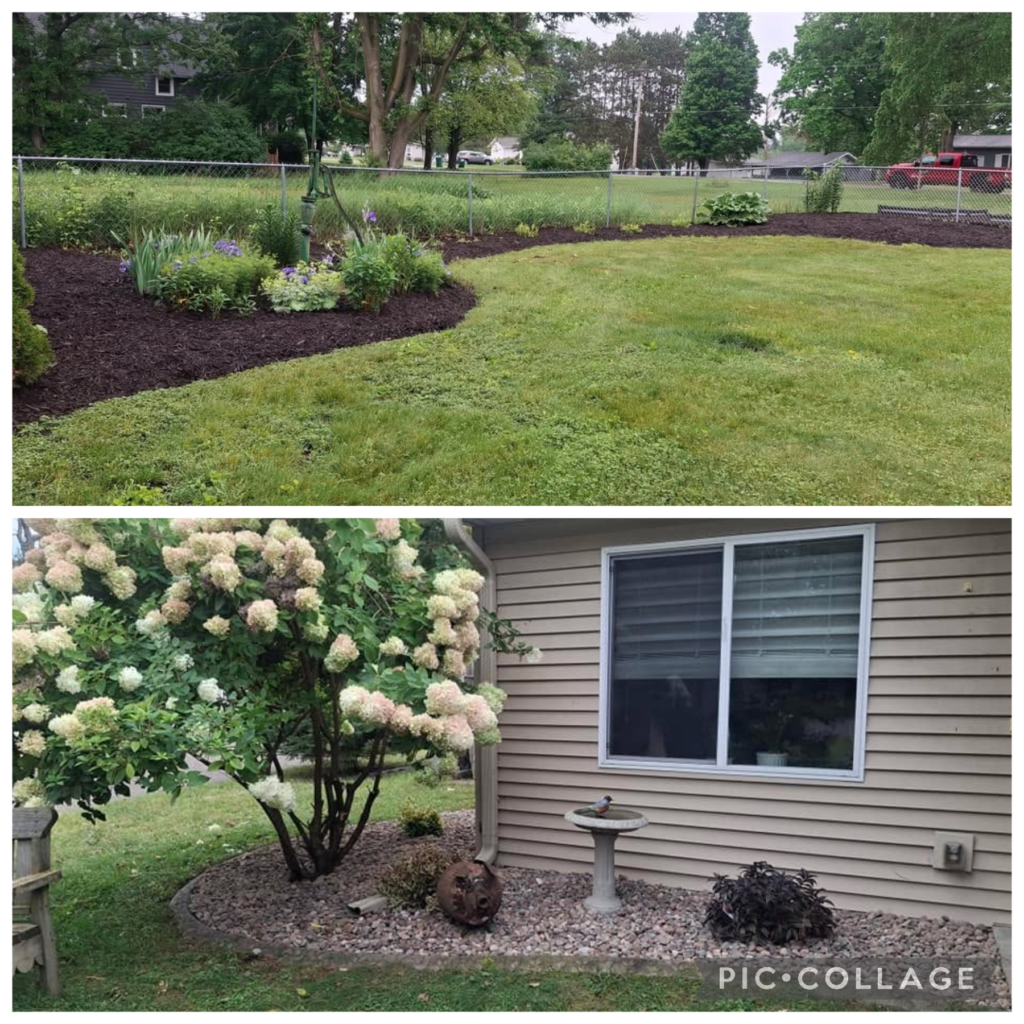
When the peak of summer hits the Chippewa Valley, it’s not just your open lawn that feels the heat—your landscaping beds take a beating, too. As the sun beats down day after day, the roots of your favorite hydrangeas, hostas, and perennials can easily get baked, stressed out, and dehydrated.
If you are looking to refresh your landscaping beds, the big question usually comes down to two materials: Mulch vs. Decorative Rock.
While both look incredible and add instant curb appeal, they behave completely differently when the summer heat waves arrive. Let’s look at how these materials handle the heat, which one keeps your soil cooler, and how to choose the right fit for your property.
The Case for Mulch: The Ultimate Cooling Blanket
If your number one goal is keeping your plant roots cool and hydrated during a hot July, wood mulch is the undisputed champ. Think of mulch like a natural insulating blanket for your dirt. Because wood doesn’t hold onto heat, a thick 2-to-3-inch layer of shredded hardwood mulch physically blocks the sun from baking the ground.
- Moisture Lock: Mulch acts like a sponge, trapping moisture in the soil after a rainfall or watering session so it doesn’t instantly evaporate into the air.
- Happy Roots: By keeping the ground underneath cool and damp, your plants suffer way less heat stress, meaning less wilting and fewer dead perennials.
The Catch: Mulch breaks down over time. To keep that cooling power and rich color, you have to top it off or replace it every single spring.
The Case for Rock: High Heat, Zero Maintenance
Decorative stones—like clean Trap Rock, classic River Rock, or a premium vibrant choice like Purple Sunset—bring a stunning, high-end look to a home. But stones behave very differently under the sun than wood does.
Rocks are heavy, dense, and natural heat conductors. When the afternoon sun beats down on a rock bed, those stones absorb the heat and trap it.
- The Heat Effect: Rock beds will naturally keep the surrounding soil warmer and can radiate that heat back up toward your plants even after the sun goes down.
- The Plant Strategy: Because of this extra warmth, rock beds are best paired with tough, heat-tolerant plants, shrubs, and evergreens that don’t mind a little extra sun.
The Payoff: Why do so many homeowners choose rock anyway? Long-term durability. Unlike mulch, which dissolves and needs a total refresh every single spring, decorative stone will look crisp for years without fading or blowing away in a thunderstorm. Keep in mind: nothing lasts forever. Eventually—after a decade or more—dirt, leaves, and dust will naturally settle between the stones, and the fabric underneath will break down, meaning old rock beds do eventually need to be torn out and completely redone. But compared to mulch, it buys you way more time between major projects.
Which One Should You Choose?
At Garbers & Sons, we install tons of both, and the right choice really depends on what you are planting:
- Choose Mulch if: You have a lot of delicate, shade-loving perennials (like hostas or ferns) or young plants that require a lot of moisture and cool soil to survive the summer.
- Choose Rock if: You want a long-lasting, durable look that holds up against wind and rain for years without needing a spring refresh, and you are planting hardy shrubs or ornamental grasses that can handle the extra summer heat. Just be ready to keep up with blowing debris so it stays clean!