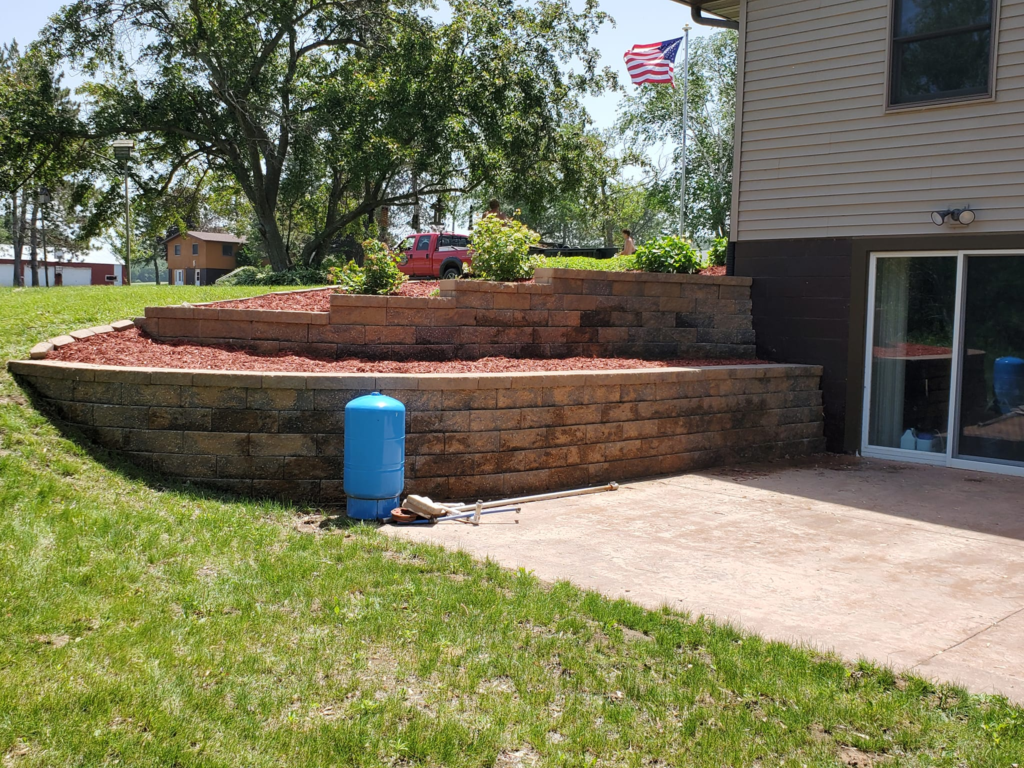
Understanding the Process from Start to Finish
If you’re considering a retaining wall for your property, one of the biggest questions is what the process actually looks like.
In many cases, homeowners don’t realize that retaining wall installation involves much more than simply stacking blocks. Instead, it’s a structured process designed to ensure long-term stability, proper drainage, and a finished result that lasts.
Because of this, understanding each step can help you feel more confident before starting your project.
1️⃣ Site Evaluation & Planning
Every project starts with understanding the property.
This includes:
- Evaluating slope and grade
- Identifying drainage concerns
- Determining wall placement
- Discussing design and materials
This step ensures the wall is built for your specific conditions.
2️⃣ Excavation
Before construction begins, the area must first be properly prepared. Because of this, excavation is one of the most important steps for long-term stability.
This involves:
- Removing soil where the wall will sit
- Creating space for the base material
- Establishing proper depth
3️⃣ Base Preparation
A strong retaining wall starts below ground.
This step includes:
- Installing a compacted gravel base
- Leveling the foundation
- Ensuring proper depth and width
A properly built base prevents shifting, settling, and failure over time.
4️⃣ Drainage Installation
Drainage is critical to the success of a retaining wall.
Without it, water pressure builds behind the wall.
We install:
- Drain tile (where needed)
- Gravel backfill
- Proper water flow paths
This protects the wall from long-term damage.
5️⃣ Wall Construction
Once the foundation is set, the wall begins to take shape.
This includes:
- Placing and leveling blocks
- Building up layers
- Ensuring proper alignment
Each layer is installed with precision to maintain strength and appearance.
6️⃣ Backfilling & Compaction
As the wall is built, material is placed behind it.
This step includes:
- Adding gravel or soil backfill
- Compacting in layers
- Supporting the structure from behind
Proper backfilling is essential for long-term performance.
7️⃣ Final Grading & Cleanup
Once the wall is complete, the surrounding area is finished.
This may include:
- Smoothing out the surrounding yard
- Addressing transitions between spaces
- Cleaning up the job site
The goal is a clean, finished look that integrates with your property.
⏱️ How Long Does Installation Take?
Project timelines vary depending on:
- Wall size
- Site conditions
- Weather
- Access to the area
Most residential retaining walls take anywhere from a few days to a week.
🧠 Why the Process Matters
Retaining walls are structural, which means they are designed to handle pressure over time.
Because of this, cutting corners in any of these steps can lead to:
- Leaning or shifting
- Drainage failure
- Premature wear
A properly installed wall is built to last through Wisconsin’s changing seasons.
📍 Ready to Start Your Project?
Garbers & Sons provides professional retaining wall installation in Eau Claire, Altoona, and surrounding areas.
👉 Contact us today to schedule your consultation.