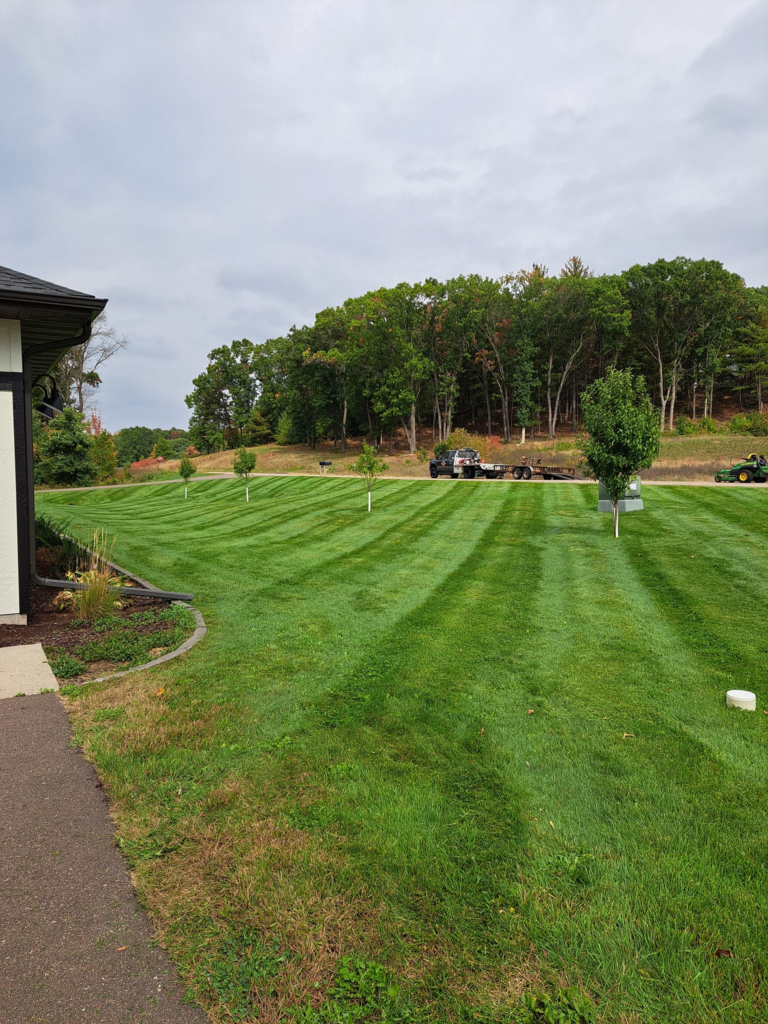
Is your lawn turning a shade of brown that has you worried? Before you panic, it’s important to know that in Wisconsin, a brown lawn in July doesn’t always mean it’s dead.
In the heat of the summer, many cool-season grasses enter a state of dormancy. Think of it as a natural survival mechanism—the grass stops growing and turns brown to conserve energy and moisture, effectively “sleeping” until cooler temperatures and consistent rainfall return.
How to tell the difference:
- The “Tug Test”: Grab a small handful of the brown grass and give it a gentle pull. If the grass stays rooted in the ground, it is likely just dormant. If it pulls up easily with no resistance, the roots may have died.
- Observe the “Greening” Pattern: If the lawn is evenly brown, it is likely dormancy. If you see patches of brown mixed with bright green, you may be dealing with pests, disease, or localized dry spots.
- Check the Soil: If your soil is rock hard and bone-dry, your lawn is likely struggling to hydrate.
What should you do?
The best thing you can do for a dormant lawn is to avoid heavy foot traffic, which can damage the dormant grass blades, and ensure it gets at least an inch of water a week if you want to keep it green. However, if the drought persists, don’t worry—your lawn will bounce back once autumn rolls around.
Need a professional eye on your yard? If you aren’t sure if your lawn is just dormant or if it’s time for a professional intervention, we’re here to help. Our team can assess your soil health and provide the right summer care plan.