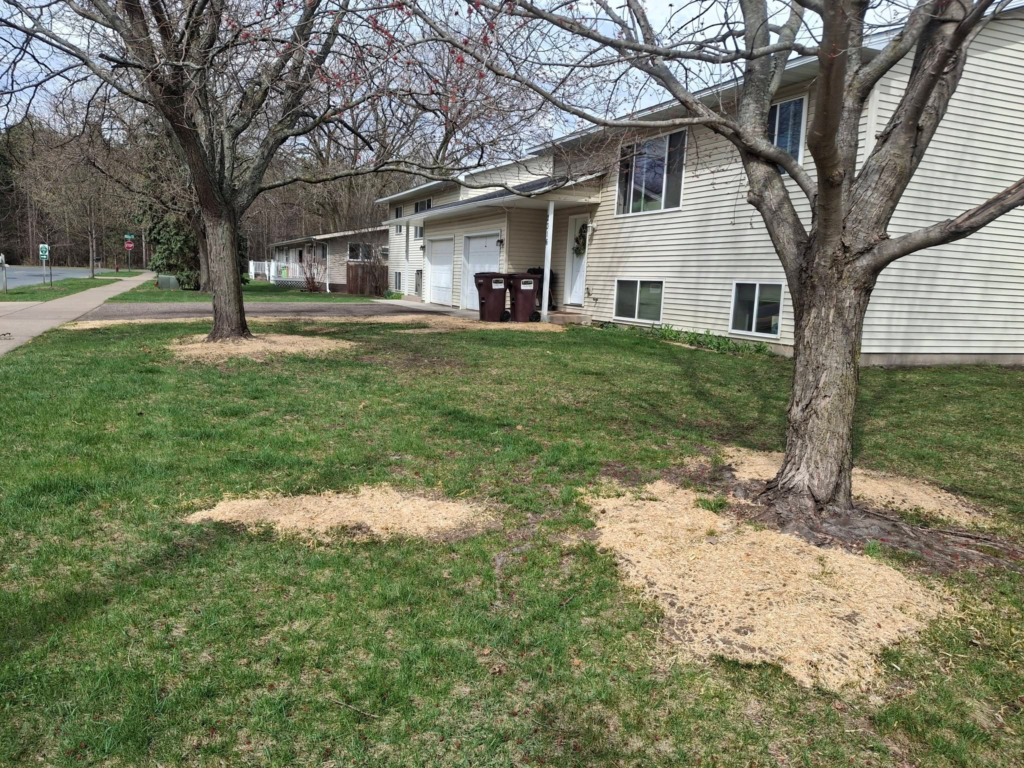
When the hot, dry days of July and August arrive, parts of your lawn can really start to show their age. Between heavy foot traffic, scorching sun, and drought stress, it’s completely normal to notice a few thin patches or completely dead brown spots popping up around your property.
If your yard is looking a little tired, your first instinct might be to go out and throw down some fresh grass seed right away.
Stop right there! Throwing grass seed down in the dead of summer is a guaranteed way to waste your time and money. The soil is too hot, the sun is too intense, and the birds will likely eat the seed before it ever gets a chance to sprout.
If you want a thick, lush lawn, the pros know that late summer and early fall is the absolute best time of year to seed in Wisconsin. But if you want total success, the prep work actually starts in August. Here is how to get your yard ready for a flawless fall seeding.
1. Timing is Everything in the Chippewa Valley
In Western Wisconsin, our prime window for seeding grass is usually between mid-August and mid-September.
During this sweet spot, the blazing summer heat begins to break, the nights get cooler, and we typically get more natural rainfall. Even better, the soil itself is still nice and warm from the summer sun. Warm soil combined with cool air creates the absolute perfect “incubator” for fresh grass seed to germinate quickly and build strong roots before the winter freeze hits.
2. Clear Out the Dead Thatch
You can’t just throw grass seed on top of dead, matted grass and expect it to grow. For a seed to sprout, it needs direct seed-to-soil contact.
Take a hard rake to those dead, crispy brown patches in August. Physically scrape away the dead grass blades, matted roots, and debris until you can see the bare dirt underneath. If you leave that layer of dead thatch in place, it will act like a shield, blocking your new seed from ever reaching the soil.
3. Scuff Up the Dirt
Once you can see the bare soil, it’s time to prep the bed. Wisconsin clay gets incredibly hard and compacted under the summer sun. If the dirt is as hard as concrete, the tiny roots of your new grass won’t be able to penetrate the ground.
Use a sturdy garden rake or a cultivator to scratch up the top quarter-inch of soil. Loosening up that top layer gives the new seeds a nice, soft place to settle in and ensures they won’t just wash away during the next heavy rainfall.
4. Plan for the Water
Before you even drop a single piece of seed, make sure you have a watering plan ready to go. New grass seed needs to stay consistently damp to survive. Once you seed in late August or September, you will need to give those areas a light misting 1 to 2 times every single day for the first couple of weeks. If the seed dries out after it starts to sprout, it will die.
Let Us Do the Heavy Lifting
Getting a yard ready for fresh seeding takes a lot of sweat, raking, and prep work to ensure you don’t just waste your investment on seed that won’t grow.
If you have large dead sections from summer stress, or you just want to completely refresh a thin lawn this fall, let us handle the hard work. We can get your dirt perfectly prepped, leveled, and seeded during the prime autumn window so you can sit back and enjoy a thick, green yard next spring!